The Version You Watched Last Year Doesn't Exist Anymore
Somewhere between the first time you hit play and right now, your favorite movie might have changed. Not dramatically. Not in a way that would trigger a news cycle or a Reddit meltdown — at least not immediately. A scene trimmed here. A color palette quietly adjusted there. A line of dialogue that used to land a certain way now landing slightly differently, because it's been dubbed over with a cleaner audio mix you never asked for.
Welcome to the streaming era's least-discussed open secret: the invisible edit.
The Cut Nobody Announced
Traditional media had a kind of permanence to it. You bought the DVD, you owned that version. The theatrical cut was the theatrical cut. But streaming fundamentally broke that contract between a piece of art and its audience — and most of us signed off on it without reading the fine print.
Platforms like Netflix, Disney+, and Max operate under a model where content is essentially living software. It can be updated, patched, and revised the same way your phone's operating system gets tweaked overnight while you sleep. The difference is that nobody sends a push notification saying hey, that scene in Episode 4 you loved? We trimmed eight seconds off it.
Some of these changes are genuinely mundane. Music licensing is a massive driver — if a platform's deal with a rights holder expires or gets renegotiated, that song playing over a pivotal moment might quietly get swapped for something generic. You might not even consciously register it. You just feel like the scene hits slightly less hard than you remembered, and you assume it's you.
It's not always you.
Why Platforms Make These Moves
The motivations behind post-release edits aren't always sinister, but they're almost always strategic.
Legal exposure is one of the biggest triggers. A background detail — a logo, a storefront sign, a piece of art on a wall — can create intellectual property headaches that nobody caught during production. Fixing it digitally after the fact is cheaper and quieter than a lawsuit.
Cultural and regional pressure is another major factor. A platform releasing content globally is constantly navigating different regulatory environments. A scene acceptable in the US might require modification for distribution in other markets, and sometimes — not always, but sometimes — the globally-edited version quietly becomes the default version everywhere, including here.
Advertiser and partner sensitivity plays a role too, especially as streaming platforms increasingly rely on ad-supported tiers. Content that was greenlit under a pure subscription model sometimes gets a soft review once ads enter the picture.
And then there's the category that's hardest to track: aesthetic revisions. Directors and showrunners occasionally get quiet opportunities to adjust things they weren't happy with at launch. Color grades get tweaked. Visual effects get polished. It can be genuinely well-intentioned — but it still means the version you originally experienced is gone.
The Mandela Effect Has a Server Farm
There's a reason so many online arguments about specific scenes devolve into "I swear that's not how I remember it" standoffs. Sometimes it's memory being unreliable — that's real and well-documented. But sometimes the person insisting a scene played differently is just... right. And without a reference copy to compare against, there's no way to definitively prove it.
Super-fans have started doing the work themselves. Dedicated communities on Reddit and Discord run frame-by-frame comparisons between screen captures taken at different points in time. They catalog changes to specific shows and films the way archivists catalog historical documents. It's obsessive, it's nerdy, and it's probably the only reliable accountability mechanism that exists right now — because the platforms certainly aren't providing one.
Netflix generated significant backlash a few years back when viewers noticed that the aspect ratio on certain classic films had been altered, cropping out parts of the original frame. Disney+ caught heat for digitally modifying a scene in Splash to cover up nudity — a change that was eventually acknowledged but only after viewers flagged it. These aren't isolated incidents. They're the visible tip of a much larger, mostly submerged practice.
How to Actually Spot a Change
If you want to catch an invisible edit, you have to think like an archivist.
The most reliable method is cross-referencing with physical media. If a movie or show has a Blu-ray or DVD release, that version is frozen in time. Watching a streaming version back-to-back with a physical copy is the clearest way to identify what's shifted. Timestamp differences — even a few seconds — are a red flag worth investigating.
Community watchdogs are your second-best resource. Subreddits dedicated to specific franchises often have threads specifically tracking version differences. If something feels off about a scene, search for it. Chances are someone else noticed first and documented it.
Audio cues are often the easiest tells. Music changes are harder for platforms to execute seamlessly than visual edits, so if a soundtrack moment feels jarring or generically replaced, trust that instinct.
And pay attention to runtime metadata. Streaming platforms list episode and film runtimes, and while they're not always updated accurately after an edit, a discrepancy between what a platform lists and what third-party databases like IMDb show can signal that something's been altered.
The Bigger Question Nobody's Asking Loudly Enough
Beyond the detective work, there's a more uncomfortable conversation sitting underneath all of this. When you stream something, what exactly are you paying for? You're not purchasing a copy. You're renting access to whatever version the platform decides to serve you on any given day. That version can change without your knowledge, without your consent, and without any record of what it used to be.
For casual viewing, maybe that's fine. But for films and shows that carry cultural weight — work that people study, reference, debate, and build emotional architecture around — the impermanence is genuinely troubling. Art isn't supposed to be a live document. The ability to silently revise the past is a strange kind of power, and right now, the platforms hold all of it.
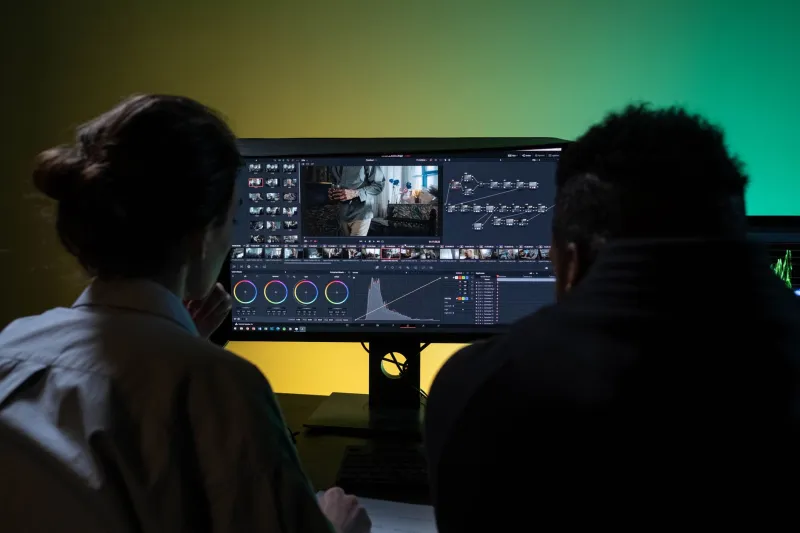
The edit room used to be where a film was finished. Now it's apparently where it keeps getting unfinished, quietly, while you're not looking.
So next time a scene doesn't hit the way you remember — before you blame your memory — maybe check the runtime.