Lights, Camera, Forgive Me: The Hidden Production Playbook Behind Celebrity Apology Videos
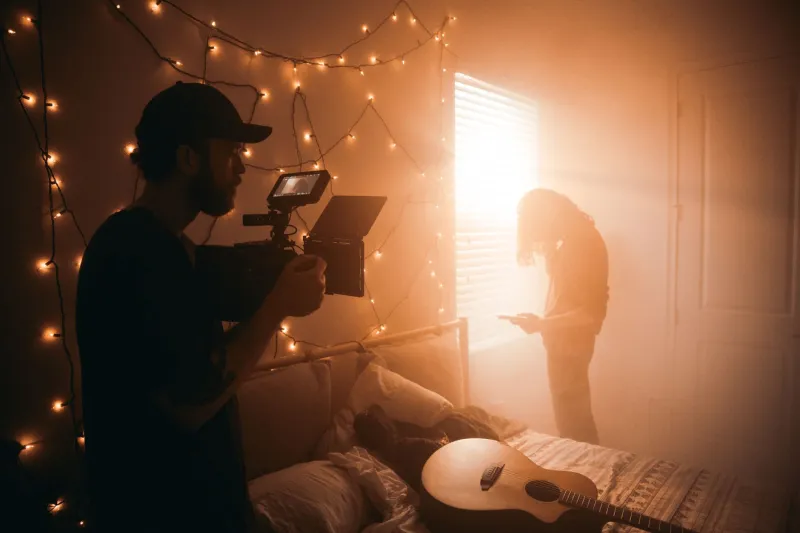
You've seen the setup a hundred times. Dim, warm lighting. No makeup — or makeup that looks like no makeup. A bedroom or a couch in the background, something lived-in and relatable. Then the celebrity leans slightly toward the camera, takes a breath that's just a half-second too long, and starts talking. And somehow, by the end of it, you're not entirely sure what they actually said.
That's not an accident.
Celebrity apology videos are one of the most engineered pieces of content in modern entertainment, and they've gotten so sophisticated that most people watch them without ever clocking the machinery underneath. The words matter, sure. But the real message — the one that either sells you on their sincerity or quietly repels something in your gut — is being delivered through everything else.
The Camera Knows Where Their Eyes Aren't
Let's start with the most obvious tell that nobody talks about: eye contact.
When someone is genuinely remorseful, direct eye contact is uncomfortable for them. It costs something emotionally. Real guilt makes people look away, look down, blink more. But here's the thing — a performed apology has a different pattern. The eyes are either locked on the lens in a way that feels rehearsed and slightly aggressive, or they drift in a very specific direction: up and to the right, which most people associate with constructed thought rather than genuine recall.
The sweet spot that PR teams aim for is something in between — occasional breaks in eye contact that read as vulnerability, but always returning to the lens before the audience loses trust. Watch for it next time. The drift is choreographed.
And then there are the celebrities who film themselves slightly off-axis, where the camera sits just to the side of their eyeline. They're technically looking near the lens, but not at it. It creates a distance that registers subconsciously. You feel like you're watching someone think rather than someone addressing you. That's a very deliberate choice.
What the Background Is Actually Saying
The setting of an apology video is doing heavy narrative lifting, and most people just absorb it without examining it.
A bedroom background signals intimacy — I'm letting you into my private space, which means I'm being real with you. A living room with plants and books signals normalcy — I'm just a regular person, not a brand. A bare wall or minimal setting signals gravity — This is too serious for distractions.
But here's where it gets interesting: when the background is almost too perfect — the tastefully rumpled pillow, the soft afternoon light through a curtain that's been slightly parted — that's production design working as emotional manipulation. The "I didn't set this up" setup is one of the most set-up things in the business.
Some celebrities have even started filming in their cars, which has become its own genre of confessional intimacy. The car frame is small, enclosed, and private-feeling. It says: This is me, alone, working through something. Except the camera angle is usually suspiciously stable for someone who just pulled over on impulse.
The Strategic Silence Nobody Measures
Pause analysis is one of the most underrated tools for decoding these videos, and it's something most viewers feel without ever consciously identifying.
A genuine emotional pause — the kind that happens when someone is actually processing something difficult — has a specific texture. There's usually a micro-expression shift, sometimes a jaw movement, often a look away before the person collects themselves. The pause arrives before the thought, not after it.
In a performed apology, the pause comes after the damaging word or phrase, as if to let it land with weight. It's a rhetorical device borrowed from public speaking — create emphasis through silence. The problem is it reads as rehearsed when you know what you're looking for. The celebrity says the name of whoever they hurt, then pauses. That pause is for you, not for them.
Also worth watching: what happens in the seconds after a particularly pointed admission. Real distress tends to produce physical stillness — a kind of freeze response. Performed distress often involves movement — a hand to the face, a slight lean forward, a visible swallow. Motion that signals emotion without actually requiring it.
The Lighting Tells You How Sorry They Are
This sounds absurd, but stay with it.
Harsh overhead lighting makes faces look tired, drawn, and a little rough. That's unflattering, and no one accidentally films themselves in unflattering light unless they're making a point. When a celebrity chooses harsh or minimal lighting for their apology, they're signaling: I'm not trying to look good right now. It's a sacrifice of vanity that's meant to read as sincerity.
Soft, diffused lighting — the kind that comes from a ring light set to warm — does the opposite. It makes the person look healthy, calm, and controlled even when they're claiming to be devastated. Most apology videos use this. And while there's nothing inherently dishonest about wanting to look decent on camera, the choice to appear polished while apologizing sends a signal that the emotional stakes of the moment aren't actually that high.
The most sophisticated apology videos split the difference: they'll use a slightly cooler, flatter light than the celebrity's usual content, just enough to look like they dialed it back, while still maintaining enough warmth to stay sympathetic. It's a calibrated visual retreat.
What They Never Actually Say
Beyond the visual production, there's the language architecture — and specifically, the absence of certain words.
Pay attention to whether the apology contains the word "wrong." Not "I'm sorry you were hurt" or "I regret how this came across" — but an actual acknowledgment that something they did was wrong. It's rarer than you'd think. Most celebrity apologies are grammatically structured to keep the speaker as the subject of their own pain rather than the cause of someone else's.
"I've been going through a lot" keeps the celebrity at the center. "What I did caused real harm" does not. The first is far more common.
Silences around specific details are equally revealing. When a celebrity apology is vague about exactly what happened, that vagueness is almost always intentional — either because legal counsel has advised against specifics, or because specificity would require admitting something they're not willing to admit on camera.
You Were Always the Target
None of this means every celebrity apology is fake. Some of them are genuinely remorseful people who are also working with media teams because they're professionals who understand the stakes. Sincerity and production aren't mutually exclusive.
But the production exists because you are the audience, and the audience needs to be managed. Your forgiveness — or at least your willingness to move on — has real economic value. Careers get extended or ended based on whether these videos land.
So the next time one drops, sit with it for a second before you decide how you feel. Watch the eyes. Read the background. Time the pauses. Notice what specific words they never say.
The silence between the words is usually where the truth is hiding.