The Room That Makes You Talk: How Reality TV Confession Booths Are Engineered to Strip Your Defenses
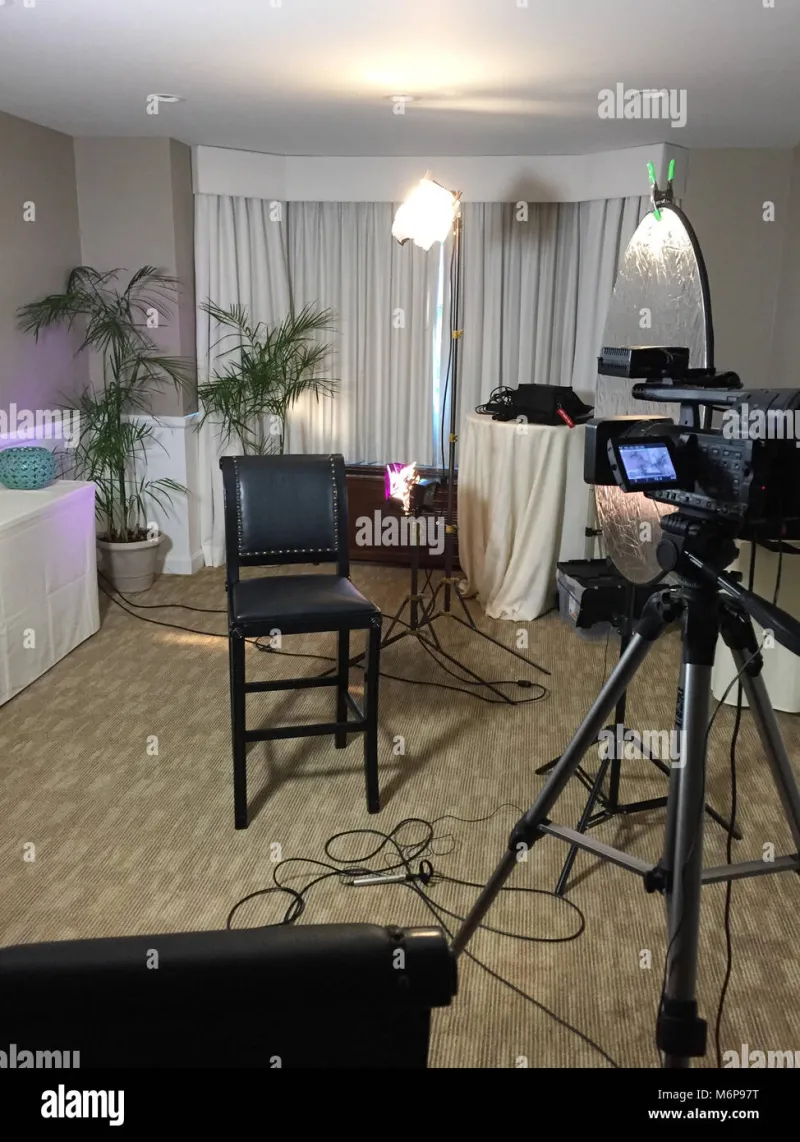
Photo: reality TV confessional booth small room camera interview dramatic lighting, via c8.alamy.com
There's a moment you've seen a thousand times. Someone sits down in a small, softly lit room. A producer asks a question from off-camera. And then — almost against their own will — the contestant starts saying the quiet part loud. They throw a cast member under the bus. They admit they're falling for someone they swore they hated. They cry in a way that feels too raw to be performed.
This is the confessional. And it is not an accident.
Reality television's confession booth — called a "diary room" on Big Brother, a "confessional" on Survivor and Real Housewives, the "beach hut" on Love Island UK — is one of the most precisely engineered psychological environments in American entertainment. Every element of that room has been calibrated to make you lower your guard, and the people who build them know more about human vulnerability than most therapists ever will.
The Architecture of Confession
Start with the physical space itself. Confessional rooms are almost universally small. That's not a production budget decision — it's intentional compression. Smaller spaces activate a mild but measurable sense of intimacy and enclosure, which nudges the human brain toward a confessional mode typically reserved for private conversations.
"You're essentially replicating the conditions of a car ride or a therapy session," said one TV producer with credits across multiple competition formats who spoke on background. "When people are in a contained space and there's no escape route and someone's listening, they talk. It's almost reflexive."
The lighting in these rooms is also doing heavy lifting. Warm, slightly dim lighting — the kind you'd associate with a bedroom or a late-night bar — has documented effects on social behavior. Research published in the Journal of Environmental Psychology found that lower ambient light reduces self-consciousness and increases the likelihood of personal disclosure. Bright, fluorescent lighting, by contrast, keeps people guarded and performance-oriented.
In a confessional, you're not under interrogation lights. You're under the lighting equivalent of a warm hug. And you start talking.
The Off-Camera Voice That Controls Everything
The producer asking questions is almost never shown on camera. This is a deliberate structural choice that creates a fascinating psychological dynamic: you're talking to a disembodied presence. There's no face to read, no body language to calibrate against. Without those social cues, people tend to fill the void with more of themselves.
Producers who conduct these sessions are often trained — formally or through years of experience — in techniques borrowed from journalism, therapy, and even law enforcement interrogation. They know how to use silence. A pause of just four or five seconds after a contestant finishes speaking is enough to make most people start elaborating, often saying something more revealing than what they intended.
They also know how to use affirmation without direction. A simple "mm-hmm" or "and then what?" keeps the subject talking without the producer technically asking leading questions. The contestant feels heard, which paradoxically makes them share more.
"The goal is to get them to a place where they forget it's an interview," the producer explained. "Once they stop thinking about the camera and start thinking about the story they're telling, you get real stuff."
Why Your Brain Stops Protecting You
Neuroscience has a lot to say about what's happening inside a contestant's head during these sessions. The prefrontal cortex — the part of your brain responsible for impulse control, social filtering, and consequence assessment — is highly sensitive to environmental conditions. Fatigue, emotional arousal, and social isolation all suppress its function.
Reality TV production schedules are notorious for being exhausting. Contestants are often sleep-deprived, emotionally overstimulated, and socially isolated from their normal support networks. By the time they sit down in a confessional, their mental firewall is already running on low battery.
Add the warm lighting, the intimate space, and an attentive off-camera voice, and you've created near-perfect conditions for what psychologists call "reduced self-monitoring" — a state where people say what they actually think rather than what they've decided to say.
On Bravo's Real Housewives franchise, confessionals are filmed weeks after the events they're discussing, but producers play back footage to trigger emotional recall before rolling. This technique, borrowed loosely from method acting, re-activates the emotional state the contestant was in during the original incident. They're not just remembering — they're partially reliving. And reliving makes people talk.
The Edit That Finishes the Job
Even when the raw confessional footage is relatively measured, the editing suite is where the final psychological effect gets constructed. Producers can cut between a contestant's confessional and footage of the event they're describing, creating an implication of cause and effect that may not reflect the original order or context of what was said.
A comment made with a smirk can be re-framed as sinister by placing it after footage of another cast member crying. A vulnerable admission can be made to look calculating depending on what surrounds it in the edit. Contestants often report watching finished episodes and barely recognizing the version of themselves on screen.
"You sign away a lot when you do reality TV," said one former competition show contestant who's appeared on two network programs. "They can make you look like a villain with footage of you doing literally nothing wrong. The confessional is where they get the audio to do it."
What This Tells Us About All of Us
The confessional booth works not because reality TV contestants are uniquely naive or attention-hungry, but because the psychological triggers it exploits are universal. Humans are wired to disclose in conditions of intimacy and perceived safety. We're social animals who fill silence, who respond to attentive listening by opening up, who become more emotionally available when we're tired and overstimulated.
Reality TV producers didn't invent these vulnerabilities. They just figured out how to build a room around them.
Next time you watch someone on Love Island or Survivor say something they're clearly going to regret, resist the urge to wonder what they were thinking. They weren't, really. That was the whole point.