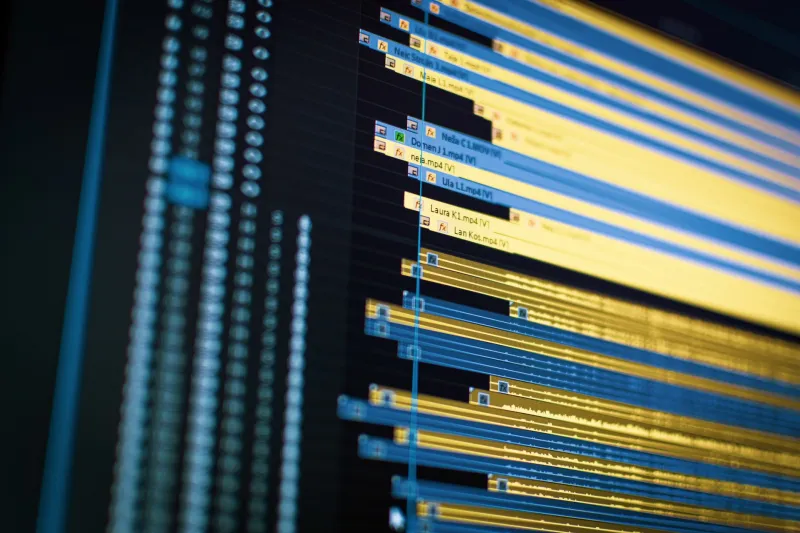
The Cut You Never Noticed: How Editing Tricks Rewire What You Think You Watched
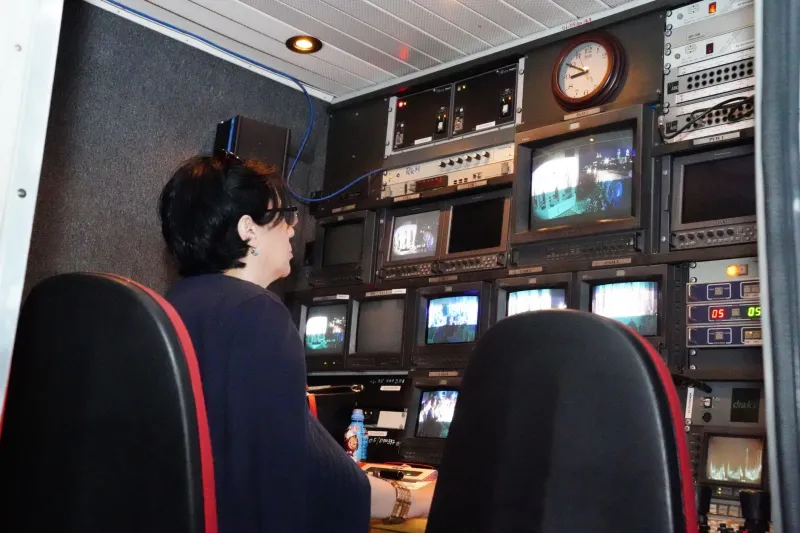
You watched the trailer. You formed an opinion. You told your friends. And somewhere in a dark editing suite, someone is laughing — not in a sinister way, exactly, but in the way that professionals laugh when a plan works perfectly.
The machinery behind modern media isn't just about what gets shown. It's about how fast it gets shown, in what order, layered against what sound, drenched in what color. And the wildest part? You already absorbed it. You just don't know it yet.
Your Brain Doesn't Watch Frame by Frame — Editors Know That
Human vision processes about 10 to 12 distinct images per second before things start blurring into motion. Cinema runs at 24 frames per second. That gap is prime real estate for editors, and the industry has been quietly exploiting it for decades.
Single-frame inserts — images lasting literally one twenty-fourth of a second — don't register as something you saw. They register as something you felt. A flash of a character's frightened expression buried inside an action sequence doesn't read as a visible moment. It reads as a vibe, a gut sense that something is wrong, a residue of unease you carry into the next scene without knowing why.
Trailer editors in particular have weaponized this technique. You'll see it most clearly when a trailer makes you feel like a film is darker or more intense than the actual movie ends up being. That's not an accident. That's craft.
The Color Grade Is Lying to You About the Tone
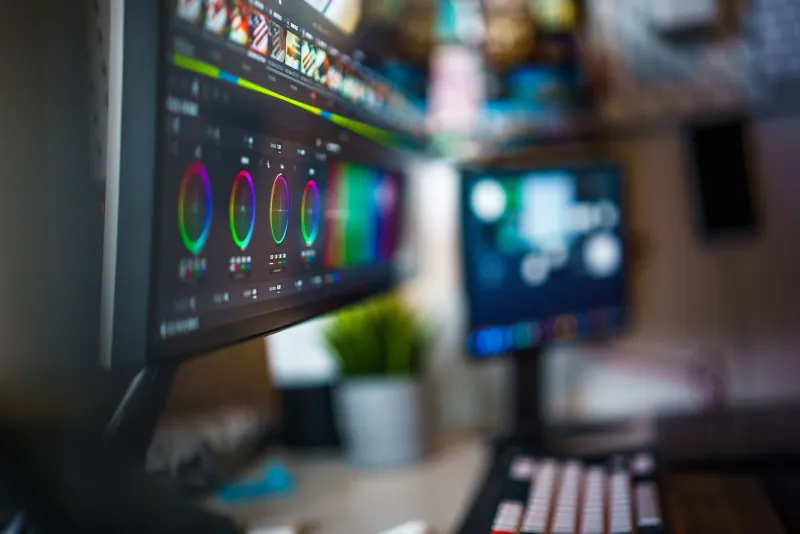
Color grading is the post-production process of adjusting the hues, saturation, and contrast of footage — and it is one of the most underappreciated manipulation tools in the entire entertainment pipeline.
Here's a real pattern worth noticing: studios frequently release trailers with a noticeably different color grade than the final film. The trailer for a summer blockbuster might run cooler, bluer, more desaturated — signaling grit, seriousness, prestige. Then the actual movie arrives warm, golden, almost nostalgic. The trailer was selling a version of the film that never existed.
Music videos do this constantly. An artist dropping a darker, more introspective era will release visuals soaked in washed-out grays and deep shadows. Then the actual album drops and it's... fine. Upbeat, even. But the color story told in that video already wired the audience to receive it as profound. The grade did the PR work before the music had a chance to.
Audio Layering: The Sound You Hear Is Not the Sound You're Hearing
This one is sneaky in a way that feels almost unfair once you're aware of it.
Trailer audio is almost never the actual audio from the film. What you're hearing is a carefully constructed sonic environment built specifically to trigger emotional responses. Low-frequency rumbles — sometimes called "braams" after the sound popularized in Inception trailers — activate a physiological stress response. Your pulse ticks up. Your attention sharpens. Your brain flags whatever is on screen as important.
Now layer that under footage of, say, a celebrity on a red carpet, or a behind-the-scenes clip of a director laughing on set. Suddenly the mundane feels weighted. The casual feels significant. The promotional fluff feels like a document.
Reality TV confession booth segments use a version of this constantly. The background hum in those scenes isn't ambient room noise — it's a produced tone designed to create a sense of intimacy and pressure. Contestants feel more exposed. Viewers feel more like voyeurs. The sound design is manufacturing the emotional stakes the situation alone couldn't deliver.
The Trailer That Rewrote a Whole Movie's Meaning
Let's talk about a specific type of editorial conspiracy that plays out with almost clockwork regularity in Hollywood.
A studio acquires a film that's difficult to market — maybe it's tonally weird, maybe it's slow, maybe the lead performance is subtle in ways that don't pop in 90-second cuts. The marketing team gets to work. Through selective editing, they isolate three or four scenes that carry conventional emotional beats. They sequence them to imply a plot that's simpler and more familiar than the actual film. They add a pop song that wasn't in the movie at all. They color grade everything to look slicker.
The result is a trailer that markets a completely different film. Audiences show up expecting one thing and get another. Reviews split weirdly. Some people love it. Others feel genuinely deceived — and they're right to, because in a very real sense, they were shown something that doesn't exist.
This has happened enough times that film critics have a loose vocabulary for it. They call it "trailer fraud." The studios call it "creative marketing." The editing suite calls it Tuesday.
Behind-the-Scenes Content Is the Most Edited Thing You'll Ever See
Here's the angle that doesn't get enough attention: the footage explicitly framed as unfiltered is often the most constructed.
Behind-the-scenes content, making-of documentaries, and "candid" social media drops from major productions are edited with the same intentionality as the actual film — sometimes more. Every moment of apparent spontaneity has been selected from hours of footage. The laugh that looks natural was chosen over seventeen other laughs. The "raw" emotional moment between two co-stars was cut down from a twelve-minute conversation that told a very different story.
This matters because audiences have started treating BTS content as a corrective to the polished official product. It feels like truth-telling. It feels like you're getting the real version. But you're getting a curated version of the real version, edited to reinforce whatever narrative the studio or artist needs you to believe about the project.
The editing suite doesn't stop at the official content. It extends all the way to the stuff that's supposed to prove the editing suite isn't running everything.
So What Do You Actually Do With This
Knowing this doesn't make you immune to it — that's the frustrating part. The techniques work on trained editors who know exactly what to look for. They work on film professors. They work on people writing articles about them.
But awareness does something. It introduces a small delay between the emotional response and the belief that follows it. That gap — even a tiny one — is where critical thinking lives.
Next time a trailer makes you feel something strongly, pause on that. Ask what color the footage was. Ask whether the music was from the film or engineered for the cut. Ask whether the scenes shown actually suggest the story implied, or whether the sequence is doing the suggesting for them.
The editing suite is always running. The least you can do is know the door is there.