Scene Never Happened: The Shadow Industry Quietly Rewriting Movies After You Already Saw Them
Here's something that should make you feel a little uneasy the next time you settle in for a rewatch: the version of a film you're streaming tonight might not be the version that hit theaters. Not because of a director's cut or a special edition — but because somebody quietly went back in, digitally, and changed things without putting a single press release out about it.
This isn't science fiction. It's a growing industry practice that exists in the space between visual effects pipelines, studio politics, and the enormous financial pressure to make a product market-ready at almost any cost. Welcome to the era of the digital reshoot — the invisible edit that never gets a credit.
What Even Is a Digital Reshoot?
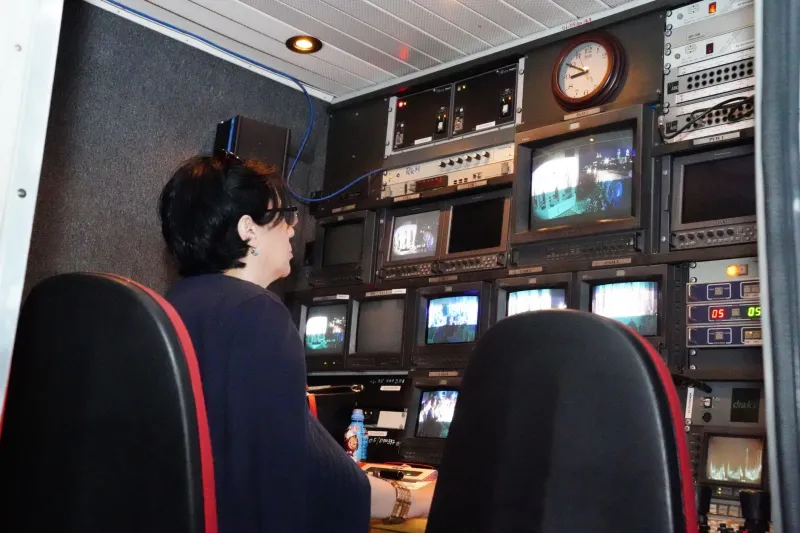
Traditional reshoots are familiar enough. A production wraps, test audiences react badly, and the studio sends the cast back to set to film new material. It's expensive, logistically messy, and occasionally leaks to the press. Actors complain. Directors grumble on podcasts. People notice.
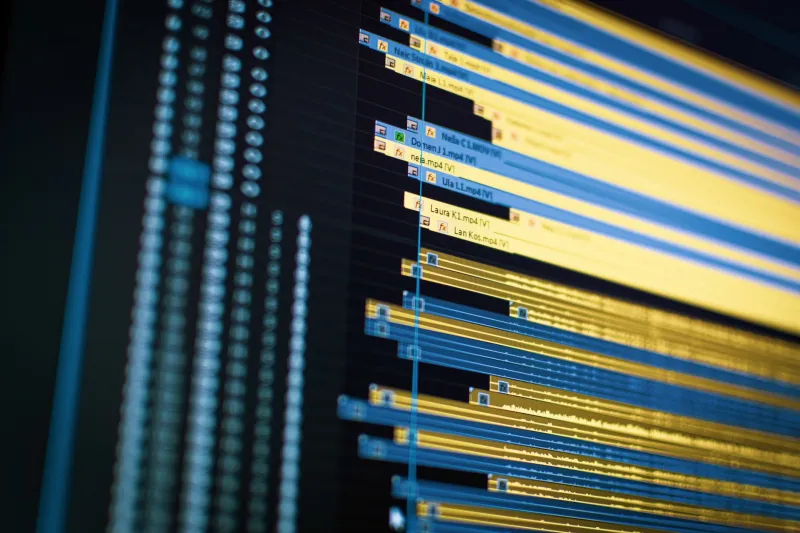
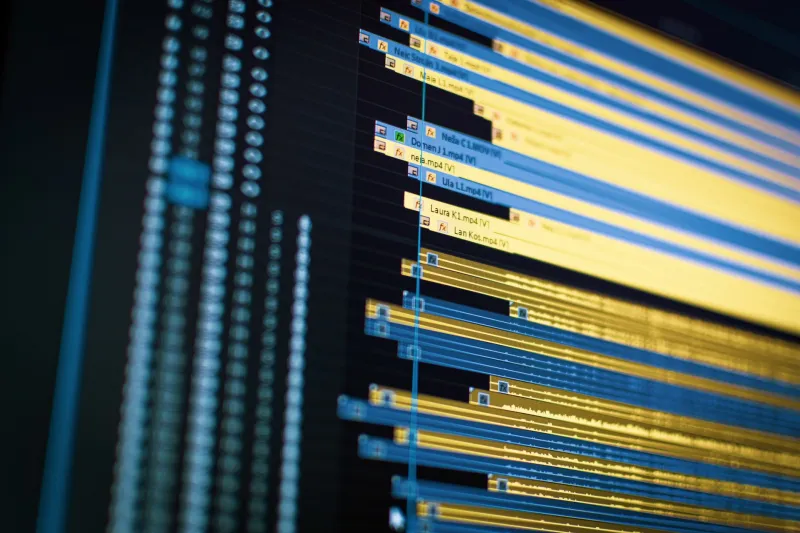
Digital reshoots operate on a completely different plane. Instead of rebuilding a physical set and rescheduling talent, studios work with visual effects houses to reconstruct scenes entirely in post-production. Dialogue gets replaced using AI voice synthesis or looped audio that audiences can't distinguish from the original. Background characters get swapped. A problematic actor's performance gets altered — expressions softened, gestures changed, entire line deliveries reconstructed — without that actor ever stepping back on set.
In the most extreme cases, the technology can now replace a character's face across multiple frames with a digital double so accurate that it bypasses human detection. No announcement. No asterisk. Just a different scene, presented as the original.
Why Studios Are Doing This More Than Ever
The financial logic is almost embarrassingly simple. A traditional reshoot on a major production can cost anywhere from $5 million to $50 million, depending on scale. Digital reconstruction, while not cheap, has become dramatically more affordable as AI-assisted compositing tools have matured. The math increasingly favors the digital route.
But cost is only part of it. The other driver is control — specifically, the ability to fix problems that emerge after a film's cultural moment has already passed. A high-profile actor getting embroiled in controversy mid-release? Digital tools let studios quietly scrub or reduce that presence in future versions. A test audience in Omaha flagging a specific joke as tone-deaf? Gone, replaced, before the wide release even rolls out nationally. A plot point that confuses focus groups? Reconstructed at the molecular level of the edit.
Streaming has supercharged this further. When a film lives on a platform that updates its files the way apps push patches, there's no physical print to account for. The file just gets replaced. No announcement. No archival record accessible to the average viewer.
The Tech Stack Making It Invisible
This wouldn't be possible without a convergence of several technologies that have matured simultaneously over the last five years. Neural rendering — the process of using machine learning to generate photorealistic imagery from reference footage — can now reconstruct human faces with enough fidelity to fool the eye in motion. Combined with deepfake-adjacent facial reenactment tools (the legitimate, studio-grade versions, not the consumer apps), a performance can be subtly remodeled without reshooting a single frame.
On the audio side, voice cloning technology has quietly become a standard tool in post-production pipelines at major studios. What began as a way to clean up on-set audio has evolved into a mechanism for altering dialogue wholesale. If an actor delivered a line one way and the studio now wants it another way, the synthetic voice model — trained on hours of that actor's recordings — can produce the new version without the actor's physical presence. Whether that requires consent under existing contracts is, to put it diplomatically, a legal gray area that Hollywood is actively avoiding discussing in public.
How to Catch the Tells
For the curious and the skeptical, there are patterns worth watching for — subtle artifacts that digital reshoots tend to leave behind.
Lip sync drift is one of the most common giveaways. When dialogue is replaced in post, the new audio has to be mapped onto existing mouth movements. Even with advanced tools, there are frames where the sync feels slightly off — not egregiously wrong, but just a half-beat delayed or misaligned in a way that feels vaguely dreamlike.
Lighting inconsistencies are another flag. Digital reconstruction of a scene has to match the original lighting setup, and while VFX artists are extraordinarily skilled, there are moments — especially in close-ups — where the quality of light on a face doesn't quite match the ambient light in the room. Shadows fall at slightly wrong angles. Skin tones shift almost imperceptibly between shots in the same sequence.
Emotional discontinuity is subtler but real. When a performance is digitally altered — expressions softened, reactions changed — the through-line of a character's emotional arc in a scene can fracture. You'll feel it before you can name it: a moment that doesn't quite connect to the one before it, a reaction that seems slightly mismatched to what just happened on screen.
If you're really committed, comparing a film's theatrical release (if you saw it, or if early reviews or audience recordings exist) with its current streaming version can reveal edits that were never formally disclosed.
The Disclosure Problem Nobody Wants to Touch
Here's where it gets genuinely thorny. There is currently no industry standard — and no legal requirement — for studios to disclose when digital reconstruction has been used to alter a scene after production. The Screen Actors Guild has provisions around the use of digital likeness, but enforcement in the context of subtle performance alteration is murky at best. Directors' Guild rules address reshoots in the traditional sense, but the definition of a "reshoot" hasn't kept pace with what the technology now makes possible.
Audiences, meanwhile, have no way of knowing. There's no label. No asterisk in the credits. No version history the way a Wikipedia article has one. You watch what you're given and assume it's what was made.
The studios aren't exactly rushing to create that transparency. The entire value proposition of the digital reshoot is its invisibility.
What This Means for the Experience of Watching
There's a philosophical dimension here that's easy to dismiss but hard to fully shake. If a scene can be altered after the fact — silently, seamlessly, without disclosure — then what exactly is a film? It stops being a fixed artifact and becomes something more like a living document, subject to revision based on financial, legal, or political pressures that have nothing to do with artistic intent.
The movie you loved might already be a slightly different movie. The performance you thought was remarkable might have been partially rebuilt by an algorithm. The moment that hit you — that specific line read, that particular expression — might not have existed in quite that form when the actor actually stood on set.
That's not nothing. And the fact that the industry prefers you not think about it is, honestly, the most interesting part of the whole story.