What the Trophy Hides: Decoding the Gaps, Gasps, and Glances Inside Award Acceptance Speeches
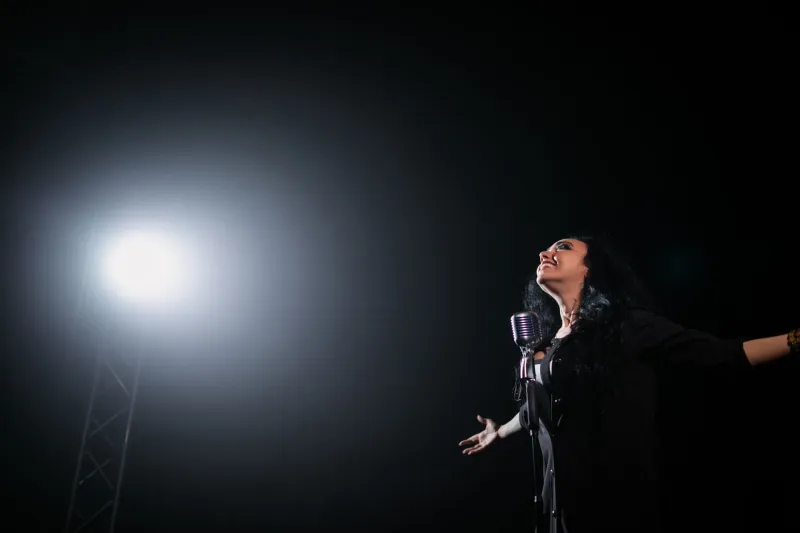
The envelope tears open. The name gets called. And for approximately two to four seconds, a person stands completely still in front of millions of people — mouth slightly open, eyes doing something complicated — before they remember how to move their legs.
That gap? That's not shock. Not always.
Awards season in America is basically a masterclass in performed vulnerability. The Oscars, the Emmys, the Grammys — they're all running the same fundamental theater: person receives validation, person appears humbled by validation, audience feels something, credits roll. But if you've ever watched one of these speeches with the volume low, or with the closed captions lagging just behind the audio, you start to notice a completely different broadcast happening underneath the one everyone's talking about the next morning.
The words are almost beside the point.
The Pause That Wasn't Surprise
Genuine shock has a very specific physical signature. The breath comes in fast and audible. The hands go somewhere involuntary — up to the mouth, out to the side, gripping the armrest of whoever's sitting next to them. The eyes go wide and then immediately start scanning the room, not for the camera, but just because the brain is overwhelmed and looking for something stable to anchor to.
What you see at most major ceremonies is something else entirely.
The pause — that famous "I can't believe it" pause — tends to last exactly long enough to feel genuine without actually losing control of the moment. It's a beat. A practiced beat that lets the audience project whatever they need onto the winner's face before the winner reclaims the narrative. Speech coaches who work in Hollywood have talked about this in various interviews over the years: you rehearse the moment of receiving, not just the words after it. You rehearse what your face does when your name gets called.
So when a major star holds that breath for three seconds and closes their eyes before walking to the stage, they're not processing a surprise. They're delivering one.
Names Left Unspoken
Here's where it gets genuinely interesting. The people a winner thanks tell you a lot. But the people they conspicuously don't thank? That's the whole other conversation happening in the white space.
Pay attention the next time someone wins a major acting award after a very public falling-out with a director, a co-star, or a studio executive. Watch how they navigate the thank-you list. There's often a very deliberate broadness — "everyone at the studio," "the incredible team behind this" — that functions as a linguistic force field. It covers the gap where a specific name should go without making the omission obvious enough to clip for a headline.
Occasionally someone slips. They'll start a sentence in a direction that implies a name is coming, then redirect mid-breath into something vaguer. That redirect is the tell. The sentence that pivots is almost always more revealing than the sentence that lands.
The Stumble as Strategy
Verbal stumbles in high-stakes speeches are almost never what they appear to be. There are two kinds, and they look nearly identical on camera but mean completely different things.
The first kind is actual nerves — the word that falls apart because the adrenaline is real and the body is running faster than the mouth. These stumbles tend to cluster at the beginning of the speech, before the speaker finds their rhythm. They come with visible physical symptoms: the slight tremor, the swallow, the quick glance down even when there's nothing written down to look at.
The second kind is strategic roughness. A smoothly delivered speech at a major ceremony reads as rehearsed. Rehearsed reads as calculating. Calculating, in the current cultural climate, reads as inauthentic. So a careful, deliberate stumble — a "sorry, I'm just" — followed by a visible emotional recovery does two things simultaneously: it makes the speech feel spontaneous, and it buys an extra few seconds of audience sympathy that resets the room's energy in the speaker's favor.
Watch the stumble and then watch what comes immediately after it. If the recovery is too clean — if the next sentence is suddenly perfectly constructed and emotionally precise — you're looking at a rehearsed imperfection.
Eye Contact and the Camera Problem
One of the more revealing things you can track during any major speech is where the winner's eyes go. A person genuinely processing emotion tends to look away from cameras, not toward them. They look at the floor, at a specific person in the crowd, at some middle-distance point that their brain has defaulted to because it needs somewhere to put the overwhelm.
Celebrity speakers who've been in this situation multiple times — or who've been media-trained within an inch of their lives — tend to make very deliberate eye contact with the camera at emotionally significant moments. It's counterintuitive. You'd think looking at the camera would feel cold or performative. But when it's timed right, when the eyes find the lens exactly as the voice cracks, it creates an intimacy that reaches through the screen.
That's not an accident. That's a skill.
The giveaway is when someone oscillates between these two modes in a way that doesn't quite track emotionally. Looking away during a part of the speech that should be deeply personal. Making direct camera contact during a rote thank-you list. The eyes and the words stop matching, and for just a moment, the machinery underneath the performance becomes visible.
What the Breath Holds
Actors know breath better than almost any other profession. Breath control is literally part of the craft — it shapes pacing, emotion, presence. So when an actor holds their breath during a speech, it's almost never involuntary.
A held breath before a name lands like a drumroll. It tells the room: this one matters more than the others. It's a way of honoring someone without using more words. But it's also a way of signaling to the audience — and to industry insiders watching — where the speaker's actual allegiances and gratitudes sit.
Conversely, a quick, shallow breath before a name can function as a kind of distancing mechanism. It's the verbal equivalent of a small step backward. The name still gets said, the obligation gets met, but the body is quietly broadcasting that the relationship is more complicated than the podium moment allows.
The Speech That Didn't Happen
Maybe the most interesting data point in any awards speech isn't the speech at all. It's what clearly didn't make the final cut.
Winners in major categories at major ceremonies have typically had days — sometimes weeks — to think about what they'd say if they won. Which means the speech you're hearing is already a heavily edited version of the speech they originally drafted in their head. The political statement that got softened. The callout that got redirected into something vaguer. The acknowledgment of a difficult year that got trimmed to a single adjective.
You can sometimes feel the shape of those missing pieces in the rhythm of what remains. A speech that rushes through certain sections. A sentence that ends on an oddly flat note, like the paragraph it was supposed to introduce got cut at the last minute. A joke that lands a little too hard on a topic that, if you follow the person's actual life, you know is anything but light.
The silence between the sentences is doing serious work. You just have to know you're supposed to be listening to it.